The World Has No Meaning, Isn't That Great?

Lately I’ve been steeped, as I’m sure many currently are, in the daily questioning of the meaning of it all. Why? Well, it’s an extremely natural thing to do, it’s something humans have done all through time. Find meaning to the universe, to the world, to our lives — it’s why humans created religion. But I’m steeped in this, because often I can’t help but feel that maybe there just isn’t a meaning to any of it. After all, if a convicted felon can win the popular vote, maybe this world is simply absurd.
I have joked consistently of being in an existential crisis, one that extends for maybe all of time. And so I thought, maybe I should actually try to figure out what that really means. Existentialism, the extremely French philosophy that conjures images of Albert Camus in a beret smoking a cigarette and lamenting on “the ennui of it all”, is something I’ve given cursory glances to, but never really tried to understand.
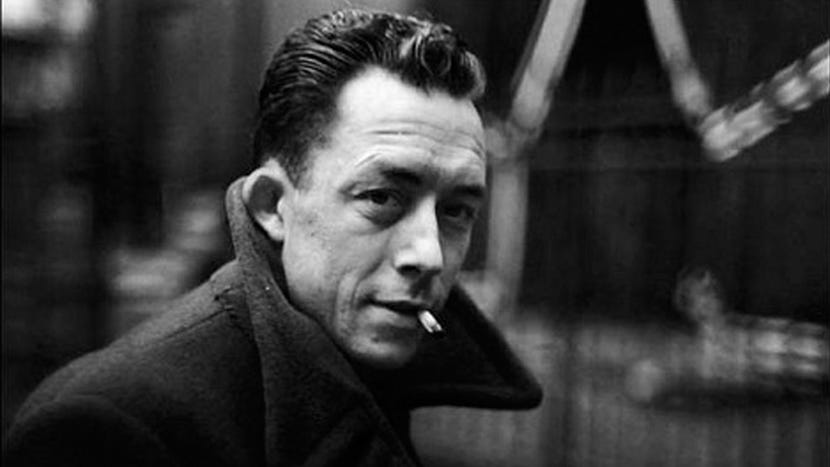
It starts with a simple premise: There is no objective meaning, purpose, or order to the universe. Life is random, and the world is full of absurd coincidences and happenstance.
You could see why the ennui must’ve been endemic in France.
But the more I looked and read, (and to be honest: listened to podcasts that dumbed it down for me) about Existentialism the more I saw a deeper freedom and even joy to it. When you accept the premise that there is no real meaning to the universe, it begs the question, “Well, then what’s the point?” To which Existentialists would argue, “Whatever the hell you want it to be!”
There’s a tenet I learned of Plato while teaching Greek history to 5th graders, the idea of an “essence”, the thing that makes a thing that thing. For example, the purpose of a knife is to cut, so the essential property of a knife is a blade, without a blade the knife is not a knife. Plato would argue that humans each have an essence as well that is born in us, an essential purpose in our lives that we must discover for ourselves.
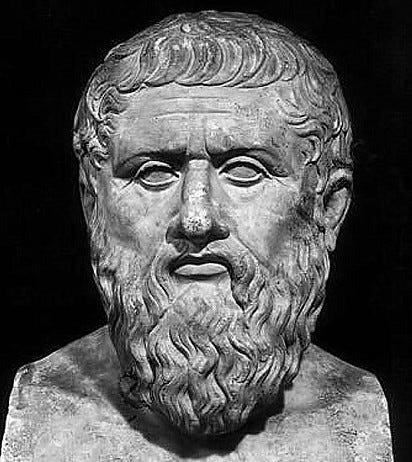
Existentialists would argue, “Nuh uh!” (their words, not mine!)
To Existentialists, existence precedes essence. This means that we exist, and through our existence and our actions, and our choices, we create our own essence. I was not born to be a teacher. I was born, then went to school where I did not do particularly well, then I went to art school, realized I needed a “real job”, decided since I really like reading and writing, and I enjoy working with kids, I might as well become a teacher. But they would also say that your essence, or purpose, is not set in stone. I am not only a teacher, but my choices, and actions, and experiences can change me, I become a husband, a father, I can be happy, I can be sad. I can be whoever, and whatever I want to be.
It’s kinda freeing in a way, but also kinda terrifying.
The way I think about it is like when you move out for the first time. You’ve got your own place, you make your own money. You pay the bills, you do the grocery shopping (you can even get the sugary cereal, no one can stop you!) And then you realize you have to make a doctor’s appointment, and you wonder why your mom still hasn’t called and made you an appointment yet. Oh, right, that’s on you now. You’re the adult in the room!

This freedom, Existentialists would say, is a lot of why we feel anxiety.
It’s like going to The Cheesecake Factory and opening that 25 page menu and not being able to decide what to get, and then the waitress comes and you’re still only on page 16 and you start to panic because everyone around you is ordering and the waitress is getting closer and closer to asking you what you want, and you don’t know, they all just look so good, but do you want pasta or a burger or maybe just cheesecake, and she finally gets to you and you panic and blurt, “Ah! I’ll get the meatloaf!” even though you didn’t actually want meatloaf, it was just the last thing you looked at before she made intense and expectant eye contact with you, but you’re too polite to change your mind so now you’re just stuck eating meatloaf that isn’t nearly as good as a juicy bacon blue cheeseburger that you really wanted, which you’ve only realized now as you are biting into your amorphous brown blob of meat, and now you’re self conscious and sad, and of course full of the ennui of existing in a meaningless world.
Of course I’m only slightly exaggerating, the menu is only 17 pages.
But this freedom does come with a lot of responsibility. (Cue Uncle Ben)
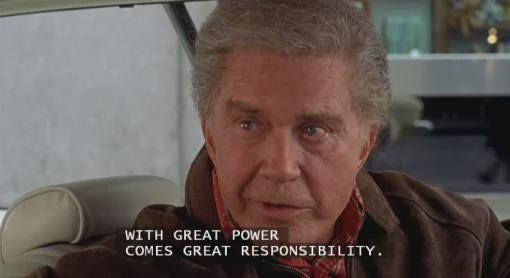
Because this world is inherently meaningless, it is up to you to create your own meaning. You decide your path in life. You choose what to care about and what to ignore. You decide the values and goals to strive for. There is no objective truth, there is only you and the truth you create.
Albert Camus uses the mythical king Sisyphus to illustrate this. Sisyphus is punished by the gods to spend eternity rolling a boulder up a steep hill only for it fall back down each night and have to start over each new day. The repetitive action is pointless and painful, and yet Sisyphus repeats it day after day for all of eternity. Camus would say we live each day much the same way: strain a boulder up the hill, it falls, start all over the next day. It is fruitless and devoid of meaning. Cheery, right?
So how do we respond to this absurdity? Well, Camus had three solutions.
Suicide. (His stance, and mine, on this one: don’t do it.)
Religion (or as he would call it, philosophical suicide). Instead of facing up to the reality of the meaninglessness of the world, give yourself up to the belief that there is actually some ordered and purposeful existence, even if it’s not on this earth.
Revolt. Life has no meaning? Cool, then do whatever the hell you want! Live authentically as yourself. You have freedom to make choices, to decide who you are and what you want to be. You can decide what has meaning and what doesn’t. Don’t let those bastards grind you down!
So for Sisyphus, pushing the boulder up the hill for eternity, he revolts. He takes this punishment handed down from the gods and he makes a mockery of it. As Camus writes, “One must imagine Sisyphus happy.”
So why am I feeling drawn towards Existentialism?
Well, sometimes it just kinda feels like the world is on fire. Objectively speaking, there really doesn’t feel like much makes sense outside of the confines of my home. My family, my dog, tend to be the only things that make sense to me right now (and even that is a bit of a stretch). Truth is this world is pretty nonsensical much of the time. So, I can either deny this objective reality that I am living in, prescribe some kind of cosmic plan and order to it all, which Camus would call philosophical suicide, or I can accept that, yes, this world has no objective meaning, but isn’t that great? Isn’t it wonderful that I get to choose who I am. I get to choose what matters to me, what my purpose is (or at least embark on the endless journey to discover it). My reality is created and defined by me, how I interpret it, how I respond, my choices, my actions. It’s a lot of freedom to contend with, but the struggle itself toward the heights is enough to fill a man’s heart.
A note on ennui:
I first came in contact with the word ennui in high school. I believe it was my Freshman English class with Mrs. Vickers. There was a vocabulary list poster on the wall, with ennui being one of the words. A more attentive student asked her about it, what did it mean? She explained it was a kind of boredom and dissatisfaction, but on an existential scale, not just being bored in class, but being bored with the monotony of life and the universe. Instantly I loved the word, and I would try to use it as often as possible in conversations, but being the child I was, it was always assumed I was being sarcastic, or using it ironically, which yeah, much of the time I probably was, but I also just loved the word. I love the connotation, the image it creates (typically for me a French person in a beret smoking a cigarette), but also the deeper meaning behind it. “I am not bored, I am filled with ennui!” To be filled with an existential dissatisfaction, a dread for the continuation of monotony. These are the kinds of words language was made for. I dig it. Words are cool.